
Your data on MRCVSonline
The nature of the services provided by Vision Media means that we might obtain certain information about you.
Please read our Data Protection and Privacy Policy for details.

In addition, (with your consent) some parts of our website may store a 'cookie' in your browser for the purposes of
functionality or performance monitoring.
Click here to manage your settings.
If you would like to forward this story on to a friend, simply fill in the form below and click send.

Your friend's email:
Your email:
Your name:
 
 
Send Cancel

Artificial rock pools on seawalls will save species
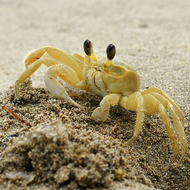
The study found creating artificial rock pools on seawalls boosted the number of creatures such as crabs, limpets and starfish, living nearby.

Study says move is the cheap option to save shoreline habitat

Ecological engineering to create artificial rock polls in seawalls could boost the numbers of crabs, limpets and starfish, a study has found.

A study by the Centre for Research on Ecological Impacts of Coastal Cities at the University of Sydney, Australia, said that 80 per cent of the money spent on protecting coastlines from climate change, is spent on new seawalls or strengthening, lengthening or increasing the height of existing ones.

"Although this protects important infrastructure, it has serious consequences for intertidal biodiversity," said lead author Dr Mark Browne who conducted the study with Prof Gee Chapman.

They added concrete pots at mid and high shore tidal levels to sandstone seawalls at Sydney Harbour and found that the artificial rock pools not only increased the number of creatures living around the area, but also supported greater covers and densities of algae.

"These results show an easy cost effective method that authorities can use to try to mitigate the adverse effects of intertidal assemblages of armouring shorelines with featureless, vertical walls," said Dr Browne.

Their findings have been published in full in The Marine Ecology Progress Series

Image by Hans Hillewaert

 

Become a member or log in to add this story to your CPD history

Submissions open for BSAVA Clinical Research Abstracts 2026

News Story 1
 The BSAVA has opened submissions for the BSAVA Clinical Research Abstracts 2026.

It is an opportunity for applicants to present new research on any veterinary subject, such as the preliminary results of a study, discussion of a new technique or a description of an interesting case.

They must be based on high-quality clinical research conducted in industry, practice or academia, and summarised in 250 words.

Applications are welcome from vets, vet nurses, practice managers, and students.

Submissions are open until 6 March 2026. 

Click here for more...
News Shorts
Survey seeks ruminant sector views on antimicrobial stewardship

A new survey is seeking views of people working in the UK ruminant sector on how to tackle the challenge of demonstrating responsible antibiotic stewardship.

Forming part of a wider, collaborative initiative, the results will help identify the types of data available so that challenges with data collection can be better understood and addressed.

Anyone working in the UK farming sector, including vets and farmers,is encouraged to complete the survey, which is available at app.onlinesurveys.jisc.ac.uk


