


AHT trials vaccine for equine grass sickness
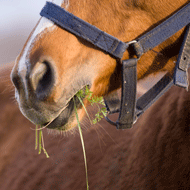
Almost all cases of EGS are seen in horses with access to grazing.
A vaccine to prevent equine grass sickness (EGS) is being trialled nationwide by the Animal Health Trust (AHT).
The trust is now ready to start recruiting horses for the trials, having carried out a small-scale pilot study last year.
Britain has the highest incidence of EGS worldwide. It is a debilitating and often fatal disease that affects horses, ponies and donkeys.
Dr Jo Ireland, EGS research co-ordinator for the trust, said: "If we see reduced disease incidence in vaccinated horses, this would provide a major breakthrough in the prevention of EGS."
Growing evidence suggests the disease may be caused by the bacterium Clostridium botulinum type C, which is commonly found in soil.
Vaccine trials will take place over two years, studying 1,100 horses and ponies. Half of the animals will be injected with a C. botulinum type C toxoid vaccine, while the remaining 550 horses and ponies will receive a placebo injection.
Only healthy horses and ponies with a valid passport, that have been kept on premises with a history of EGS in the past two years will be eligible for the trial.
AHT will collaborate with the universities of Edinburgh, Liverpool and Surrey to compare incidence of EGS between the two groups.
The theory is that EGS is a toxico-infectious form of botulism caused by C. botulinum type C. According to the trust, it is thought the disease may occur when toxins are produced in the horse's intestinal tract, as a result of a combination of risk factors.
As vaccinations protect horses from similar diseases such as tetanus and botulism, AHT says it is possible that EGS could be prevented by a vaccination.
For further information, visit www.equinegrasssickness.co.uk or email equinegrasssickness@aht.org.uk.


 Eligible members of BEVA will be able to vote for their Council team until Monday, 17 August 2026. Members will have received an election email on 17 July.



