
Your data on MRCVSonline
The nature of the services provided by Vision Media means that we might obtain certain information about you.
Please read our Data Protection and Privacy Policy for details.

In addition, (with your consent) some parts of our website may store a 'cookie' in your browser for the purposes of
functionality or performance monitoring.
Click here to manage your settings.
If you would like to forward this story on to a friend, simply fill in the form below and click send.

Your friend's email:
Your email:
Your name:
 
 
Send Cancel

Snakes show "homing" senses
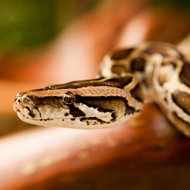
Pythons travelled u to 22 miles over the course of 296 days to return to a "home" location, researchers have found.

Pythons travel up to 22 miles to "home" location during experiment

An experiment has found that Burmese pythons display signs of map and compass senses, allowing them to travel for months to reach a location.

The study by researchers in Florida, for the first time, provides evidence that snakes may share the same compass senses as other species such as sea turtles and pigeons.

The research team took six snakes and relocated them 13 to 22 miles from where they were captured.

"All animals were placed in sealed, opaque plastic containers and were transported by vehicle to release locations (paths taken by researchers were bit direct.

"Snakes were anathematised during implantation surgeries. We radio tracked each python one to three times per week and recorded locations using a GPS from a fixed wing aircraft," said lead author Shannon Pittman in the paper published in The Royal Society journal Biology Letters.

Five of the six snakes reached within three miles of their capture locations while the sixth was moving in the right direction.

"This study provides evidence that Burmese pythons have navigational maps and compass senses .

"In addition, snakes maintained orientated movement over relatively long time scales (94-296 days), demonstrating the maintenance of long-term movement goals and high motivation to reach home locations," the study said.


 

Become a member or log in to add this story to your CPD history

Submissions open for BSAVA Clinical Research Abstracts 2026

News Story 1
 The BSAVA has opened submissions for the BSAVA Clinical Research Abstracts 2026.

It is an opportunity for applicants to present new research on any veterinary subject, such as the preliminary results of a study, discussion of a new technique or a description of an interesting case.

They must be based on high-quality clinical research conducted in industry, practice or academia, and summarised in 250 words.

Applications are welcome from vets, vet nurses, practice managers, and students.

Submissions are open until 6 March 2026. 

Click here for more...
News Shorts
Survey seeks ruminant sector views on antimicrobial stewardship

A new survey is seeking views of people working in the UK ruminant sector on how to tackle the challenge of demonstrating responsible antibiotic stewardship.

Forming part of a wider, collaborative initiative, the results will help identify the types of data available so that challenges with data collection can be better understood and addressed.

Anyone working in the UK farming sector, including vets and farmers,is encouraged to complete the survey, which is available at app.onlinesurveys.jisc.ac.uk

