
Your data on MRCVSonline
The nature of the services provided by Vision Media means that we might obtain certain information about you.
Please read our Data Protection and Privacy Policy for details.

In addition, (with your consent) some parts of our website may store a 'cookie' in your browser for the purposes of
functionality or performance monitoring.
Click here to manage your settings.
If you would like to forward this story on to a friend, simply fill in the form below and click send.

Your friend's email:
Your email:
Your name:
 
 
Send Cancel

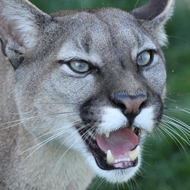
Mexican border barriers impact on pumas and coatis
Barriers in parks on the US/Mexican border are having more impact on the movement of pumas and coati, than they are on the human illegal activity they were put up to stop, researchers claim.

Park restrictions impact on animals but fail to stop illegal activity study finds

Security barriers in national parks on the US/ Mexican border are having a bigger impact on the restriction of movement of native species, such as pumas and coati, than they are on humans, research has found.

National parks in their vicinity can be vulnerable to the smuggling of people and drugs.

Barriers have been put up to counter illegal activity. But they are restricting the territory of native species according to new research from the University of Bristol.

Bristol PhD student, Jamie McCallum, now of the Zoological Society of London (ZSL), and colleagues from Bristol's School of Biological Sciences and ZSL investigated the impacts of illegal activity and the barriers themselves.

They used automatically triggered cameras (camera traps) to measure the number of humans, native and invasive mammals in four US parks on the Mexican international boundary. 

Comparisons were made between areas with barriers and those without. Puma and coati were detected more often in areas without barriers, whereas counts of humans were seemingly unaffected.

The findings have been published in an article 'Conservation on international boundaries: the impact of security barriers on selected terrestrial mammals in four protected areas in Arizona, USA'  in PLoS ONE

Image by Danny Nicholson

Become a member or log in to add this story to your CPD history

Submissions open for BSAVA Clinical Research Abstracts 2026

News Story 1
 The BSAVA has opened submissions for the BSAVA Clinical Research Abstracts 2026.

It is an opportunity for applicants to present new research on any veterinary subject, such as the preliminary results of a study, discussion of a new technique or a description of an interesting case.

They must be based on high-quality clinical research conducted in industry, practice or academia, and summarised in 250 words.

Applications are welcome from vets, vet nurses, practice managers, and students.

Submissions are open until 6 March 2026. 

Click here for more...
News Shorts
Survey seeks ruminant sector views on antimicrobial stewardship

A new survey is seeking views of people working in the UK ruminant sector on how to tackle the challenge of demonstrating responsible antibiotic stewardship.

Forming part of a wider, collaborative initiative, the results will help identify the types of data available so that challenges with data collection can be better understood and addressed.

Anyone working in the UK farming sector, including vets and farmers,is encouraged to complete the survey, which is available at app.onlinesurveys.jisc.ac.uk


