


Study reveals neglect in addressing infectious disease
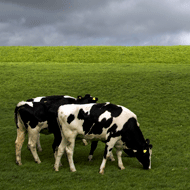
Bovine tuberculosis was one of the three diseases highlighted in the study
One Health approach recommended to tackle problem
A study has revealed that decades of neglect of infectious disease has led to devastation of thousands of people’s lives in the developing world.
Researchers at the University of Edinburgh conducted a review of every meeting held by the World Health Organisation (WHO) since it was formed in 1948. This revealed three infectious diseases in particular that have not received the recognition and funding required to combat them effectively.
Anthrax, brucellosis and bovine tuberculosis are the three zoonotic diseases that were highlighted in this review. They each lead to poor health and a threatened food supply, and are most prevalent in societies where poverty is widespread and where people’s livelihoods rely on animals.
Simple and effective controls are available for these diseases, which have been eliminated or brought under control in developed countries. However, poor healthcare infrastructure in developing countries has meant that thousands of cases are left undiagnosed, which presents a challenge to health professionals, policy makers and researchers in their efforts to combat the diseases.
A multidisciplinary One Health approach has been recommended by scientists, involving experts from a range of disciplines helping to control the disease and improve the health of both humans and animals. The findings from this study have been published in journal PLoS Neglected Tropical Diseases.
Leading the study was Professor Sue Welburn, director of the University of Edinburgh’s Global Health Academy, who said: “It is extraordinary that in the 21st century we are failing to manage brucellosis and the other neglected zoonotic diseases that impact so severely on rural communities in developing economies when, for many of these diseases, the tools to manage them are well developed.”


 Defra has published guidance for the vet sector ahead of a proposed UK-EU Sanitary and Phytosanitary agreement.



