


Birth experience can alter sheep's behaviour
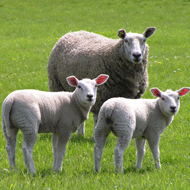
The time following birth can be a challenge for young lambs.
A study led by academics from the University of Bristol's School of Veterinary Sciences and published in the Royal Society Journal Biology Letters investigated whether early-life experiences can alter behavioural responses to giving birth, and whether it can also affect the behaviour of the next generation.
The time following birth can be a challenge for young lambs. They are usually tail-docked without analgesia as a preventative measure to reduce the chances of flies laying eggs on dirty tails. They may also experience bacterial infections such as 'joint ill' or 'navel ill', however the long-term consequences of these early life challenges are not well understood.
The research team found that female sheep that had their tails docked or experienced a mild simulation shortly after they were born, showed more pain-related behaviour when giving birth to their own lambs than did females who had not had these early-life experiences.
Furthermore, the lambs of those mothers who had experienced a mild infection in early life were less sensitive to pain during the first few days of their lives than were other lambs.
The study highlights the impact that events during the period after birth can have on an animal in later life. The researchers suggest that variations in the management of early life health and husbandry conditions can have important long-term implications for animal health and welfare.
Mike Mendl, Professor of Animal Behaviour and Welfare in the School of Veterinary Sciences, said: "Our study suggests that infection and tail-docking during the first few days of life may have long-term effects on an individual's development and behaviour, and on that of her own offspring. Further work is needed to establish the robustness of these findings, to identify potential underlying mechanisms, and to help inform husbandry practices to enhance animal health and welfare."
The work was funded at the University of Bristol by the Biotechnical and Biological Sciences Research Council (BBSRC).


 Eligible members of BEVA will be able to vote for their Council team until Monday, 17 August 2026. Members will have received an election email on 17 July.



