


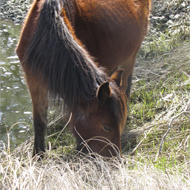
Defra will be conducting a short enquiry into horse welfare with a particular focus on "fly-grazing" - a term used to describe the practice of leaving horses to graze on public or private land without the permission of the owner or occupier of the land.
Fly-grazing contributes to poor horse welfare and also creates social, economic and environmental harm in affected communities. Additional issues of public safety may also arise if fly-grazed horses stray onto public highways or other hazardous sites.
A bill to tackle fly-grazing was introduced in Wales last October and came into force in January. The bill gave local authorities equal power to tackle those who deliberately or negligently permit their horses to graze on land without the permission of the landowner. The powers included the ability to seize, impound, return to the owner or, as a last resort, euthanise horses by humane means when they are on land without lawful consent.
News of the Welsh bill was welcomed by numerous leading UK charities, including World Horse Welfare, Redwings Horse Sanctuary, British Horse Society and Blue Cross. However, many organisations highlighted the importance of a similar measure being introduced in England, to prevent the problem moving across the border.
RSPCA head of public affairs, David Bowles said: “This problem does not just affect Wales – we need action and a solution across the whole of the UK. We have around 800 abused or abandoned horses in our care and we are working with hundreds more that need our help but we have nowhere for them to go.
“What we need is better legislation and enforcement to track down irresponsible owners; education for those who leave their animals to indiscriminately breed and more flexibility for local authorities to provide us with even more help to deal with the numbers of horses left to breed, graze, suffer and often die on other peoples’ land."
The evidence session, to begin on Wednesday, September 3, will explore the nature of the problem, the factors driving it, and potential solutions.


 Eligible members of BEVA will be able to vote for their Council team until Monday, 17 August 2026. Members will have received an election email on 17 July.



