


Student's bid to save rare bird wins award
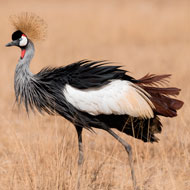
There are thought to be less than 500 grey crowned cranes in the wild due to illegal poaching.
A mission to save Rwanda's endangered grey crowned crane has earned a wildlife conservation student a top award.
Olivier Nsengimana – a distance learner at the University of Edinburgh, who is currently studying for a Masters in Conservation Medicine at the Royal (Dick) School of Veterinary Studies – is one of five young visionaries, all aged 30 or under, to receive a Rolex Award for Enterprise for his work to save the bird.
The grey crowned crane is a symbol of wealth and longevity in Rwanda but there are thought to be fewer than 500 of the endangered birds remaining in the wild in the African country because of illegal poaching and its status as a desirable pet.
Despite a ban by the Rwandan Government on killing, injuring, capturing or selling endangered species, locals poach the birds and sell them as cheaply as chickens. The result has been devastating for the grey crowned crane with the population falling by 80 per cent over the past 45 years.
Olivier aims to tackle the problem by establishing a national database of grey crowned cranes, listing all those in captivity. He is setting up an amnesty programme to encourage those keeping the birds as pets to take them to a rehabilitation centre, from where they can be released into the wild, and is embarking on an awareness raising campaign to persuade people of the importance of conservation.
The project will promote breeding programmes and also aims to stop the birds being poached by educating people about endangered species.
Olivier says he hopes the work will encourage the next generation of conservationists.
“I want to train young vets to help and take ownership of conservation projects and, so far, the response has been extremely positive.”
The Rolex Awards celebrate enterprising individuals who take on major challenges to improve lives or protect the planet. Professor Anna Meredith, conservation medicine programme director, Royal (Dick) School of Veterinary Studies, said: “This is well-deserved recognition for Olivier and we wish him every success with this important mission.”


 Defra has published guidance for the vet sector ahead of a proposed UK-EU Sanitary and Phytosanitary agreement.



