


Research find could reduce hospital infections
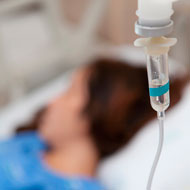
Bacteria resistant materials could reduce infections acquired through implanted medical devices such as intravenous tubes.
Researchers who discovered a group of new materials capable of repelling bacteria have won £2 miliion of funding to learn more about their find.
University of Nottingham's Morgan Alexander, Professor of Biomedical Surfaces in the School of Pharmacy, and Paul Williams, Professor of Molecular Microbiology in the School of Life Sciences, have received a Wellcome Trust Investigator Award for their joint project to understand why bacteria have taken such a dislike to their newly found polymers.
It's thought the bacteria resistant materials could lead to a significant decrease in hospital infections acquired through implanted medical devices, such as catheters, intravenous tubes and artificial joints, reducing the number of medical complications, lowering medical costs and saving thousands of lives a year.
Bacteria are attracted to implanted medical devices where they attach as single cells and grow as microcolonies where the bugs can hide to avoid detection and are protected from attack by the body’s own immune defences and antibiotics.
The Wellcome Trust research award will fund a centre of excellence that will study the underlying mechanisms behind the resistance the polymers show to bacterial attachment.
Professor Williams said: “Bacteria are highly adaptable micro-organisms and we need to discover the genetic basis of how they sense and respond to chemically distinct polymer surfaces. By combining our expertise in materials science and microbiology we are taking an interdisciplinary approach to solving a major medical problem.”


 Defra has published guidance for the vet sector ahead of a proposed UK-EU Sanitary and Phytosanitary agreement.



