


A new video put together by researchers from Cambridge and Exeter reveals how predator vision works.
Some of the secrets of how animal camouflage works have been revealed in a new study by researchers from the University of Exeter and the University of Cambridge.
The team travelled across Zambia and South Africa and took over 14,000 images and many hours of video footage as part of Project Nightjar, with the aim of working out how predator vision works.
Back in the lab, they used specially customised software to recreate the visual world of various predators including other birds and animals, analysing what makes objects blend in or stand out from their backgrounds based on the field data and which predators are able to see the hidden eggs of ground nesting birds - the first time that camouflage data has been directly linked to survival rates of real animals.
The project came about because theories about how camouflage works hadn't been tested in the wild.
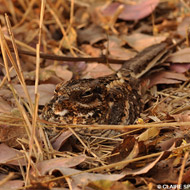
Principal investigators Dr Jolyon Troscianko and Dr Martin Stevens from the University of Exeter, and Dr Claire Spottiswoode from the University of Cambridge, developed a study system using two classes of ground nesting birds inspired by Spottiswoode's previous encounters with nightjars in Africa.
Nightjars sit tight on their eggs and rely on the camouflage of the adult bird to outwit predators. As a result their eggs are less camouflaged because the adults do the work. In contrast plovers and courses run from their nests when danger approaches and their much more exposed eggs have evolved better camouflage to blend in with their backgrounds.
Hidden cameras were used to see which predators were eating the eggs.
It was found that colour and contrast were often linked, and both were important. Dr Stevens says; "The fieldwork looks at how camouflage of real animals in the wild affects how likely they are to be eaten by a range of predators, and how camouflage is influenced by behaviour and nesting strategies of the birds."
The research was funded by The Biotechnology and Biological Sciences Research Council. For more information visit: www.cam.ac.uk/research/news/secrets-of-animal-camouflage-video-reveals-how-predator-vision-works.
Image credit: Claire Spottiswoode


 Defra has published guidance for the vet sector ahead of a proposed UK-EU Sanitary and Phytosanitary agreement.



