


Penguins at risk from habitat degradation
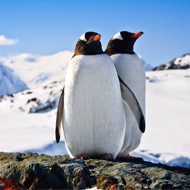
Populations of many penguin species have declined substantially over the past two decades.
Scientists are calling for measures to help penguins, including the possibility of marine protected areas, after a major study showed the birds are at continuing risk from habitat degradation.
Researchers studied all 18 species of penguin, looking at different factors where human activity might interfere with their populations. Writing in the journal Conservation Biology, the group of internationally renowned scientists recommend steps are taken to tackle issues including food scarcity, being caught in fishing nets, oil pollution and climate change.
Populations of many penguin species have declined substantially over the past two decades. In 2013, 11 species of the 18 were listed as ‘threatened’ by the International Union for Conservation of Nature (IUCN) and two as ‘near threatened’.
Forty-nine scientists contributed to the overall process, considering all the main issues affecting penguin populations including terrestrial habitat degradation, marine pollution, fisheries by catch and resource competition, environmental variability, climate change and toxic algal poisoning and disease. The group concludes that habitat loss, pollution and fishing remain the primary concerns and that the protection of penguin habitats is crucial for their future survival.
This could include the establishment of marine protected areas - zones of the sea or ocean along coastlines or in open water where wildlife in protected from damage or disturbance - although the authors acknowledge this might not always be practical, and the implementation of a number of other ecologically based management methods.
Dr Phil Trathan, head of conservation biology at the British Antarctic Survey and the lead author of the study, said: "Penguins and humans often compete for the same food, and some of our other actions also impinge upon penguins. Our research highlights some of the issues of conservation and how we might protect biodiversity and the functioning of marine ecosystems
"Whilst it is possible to design and implement large-scale marine conservation reserves it is not always practical or politically feasible. However, there are other ecosystem-based management methods that can help maintain biodiversity and a healthy ecosystem. For example, the use of spatial zoning to reduce the overlap of fisheries, oil rigs and shipping lanes with areas of the ocean used by penguins; the use of appropriate fishing methods to reduce the accidental bycatch of penguins and other species; and, the use of ecologically based fisheries harvesting rules to limit the allowable catches taken by fishermen, particularly where they target species that are also food for penguins.”
For more information visit www.antarctica.ac.uk


 Defra has published guidance for the vet sector ahead of a proposed UK-EU Sanitary and Phytosanitary agreement.



