


Pigeons and humans gamble for rewards
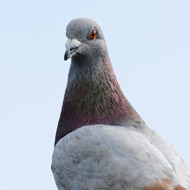
Researchers say the findings highlight the importance of past wins and losses in gambling psychology.
Scientists say humans have the same basic psychology as pigeons when it comes to risk taking.
According to new research published in Biology Letters, both humans and pigeons were 35 per cent more likely to take a risk for the chance to achieve a high-value reward than a low-value reward.
"Humans and pigeons react in similar ways when faced with risky decisions because equivalent mental processes are driving their behaviour," explained lead researcher Dr Elliot Ludvig from the University of Warwick's Department of Psychology.
Researchers argue that their findings demonstrate the importance of past wins and losses in influencing our future gambling decisions.
"Both humans and pigeons were shown to be less risk averse for high rewards then they were for low rewards and this is linked to our past memories and experiences of making risky decisions," said Dr Ludvig.
“When people gamble, they often rely on past experiences with risk and rewards to make decisions. What we found in this study is that both pigeons used these past experiences in very similar ways to guide their future gambling decisions - any big wins we’ve had in the past are memorable and stand-out when we are making our decision to gamble again”.
During the tests, the human and pigeon subjects were given four options - two leading to high-value rewards and two low-value rewards. Each reward level had a safe option with a guaranteed fixed reward and a risky option with a 50/50 option of gaining a better or worse reward.
Explaining the possible reasons for these similarities, Dr Ludvig said: “Birds are distantly related to humans, yet we still share the same basic psychology that drives risk-taking. This may be due to a shared common ancestry or similar evolutionary pressures”.


 Defra has published guidance for the vet sector ahead of a proposed UK-EU Sanitary and Phytosanitary agreement.



