


Research reveals new threat to red squirrels
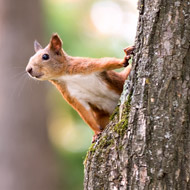
Red squirrel numbers in the UK have been declining rapidly since the introduction of grey squirrels from North America in the 19th Century.
New research led by the University of Edinburgh has revealed that red squirrels in Scotland a facing a threat from a form of leprosy.
The discovery was made by Professor Anna Meredith of the Dick Vet Exotic Animal and Wildlife Service. Six cases of the disease have been confirmed by Prof. Meredith and her team since the study began in 2006.
The disease is caused by a bacteria similar to mycobacterium lepromatosis, which is one of the bacteria involved in the human form of leprosy. However, there has been no suggestion that there is any risk to humans.
Not much is currently known about the spread of this disease, although it is believed to be widespread - infected animals have been found from the Moray Firth to Dumfries and Galloway.
Red squirrel numbers in the UK have been declining rapidly since the introduction of grey squirrels from North America in the 19th Century. The grey squirrel has replaced the native red squirrel in much of the United Kingdom, because of competition for food and habitat. They also transmit the deadly squirrel pox virus. The University of Edinburgh say that the finding of this new disease is another threat to conservation attempts.
Prof. Anna Meredith comments: "This is the last thing that they need - another disease which could potentially threaten the population. Red squirrels are in decline and they are threatened by the grey squirrel and already face the major threat of the squirrel pox virus."
The team are now urging the public to get in touch to report any sightings of squirrels that they believe may be infected to help them build a more detailed understanding of the disease.
If you spot a squirrel that may be infected with the disease, please contact Professor Meredith at anna.meredith@ed.ac.uk.


 Defra has published guidance for the vet sector ahead of a proposed UK-EU Sanitary and Phytosanitary agreement.



