


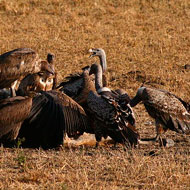
New research findings have implications for conservation and dangerous diseases
A new study of vulture feeding habits could have implications for conservation of the species, and in turn, the prevalence of dangerous diseases in animals and humans, zoologists say.
According to findings, vultures let eagles do the heavy lifting when it comes to searching for food. Keen eyesight makes eagles better equipped for spotting prey than vultures, who wait for eagles to find, kill and prepare prey for eating, before swooping down in large groups to steal the food.
Led by researchers from Trinity College Dublin, a team of zoologists studied birds in Kenya. Vultures, which eat only dead animals, follow eagles to the animal carcass, wait until the eagle has used its strong beak to tear open the animal's hide, then chase the eagle away and tuck into the meal. Scientists say eagles are still able to eat and can continue hunting afterwards.
According to researchers, these findings highlight the importance of eagles in vulture conservation.
Vultures, which are endangered due to habitat loss, hunting and accidental poisoning, are highly important in cleaning up dead and decaying animals. This reduces the risk of dangerous diseases such as anthrax. Scientists say that in the absence of vultures, the number of dogs carrying rabies could increase, posing a threat to humans.
Dr Luke McNally of the University of Edinburgh, who took part in the study, said: "Vultures already have a reputation for eating what other animals have already killed. Now we know that they also let other birds find this food and prepare it for eating.
"These remarkable results remind us that no species exists in isolation, and highlight the vital importance of taking an ecosystem approach to conserving vulture populations."
Image © Hugh Lennon, Wikimedia Commons CC BY-SA 2.0


 Defra has published guidance for the vet sector ahead of a proposed UK-EU Sanitary and Phytosanitary agreement.



