


Kent home to potential carrier of West Nile virus
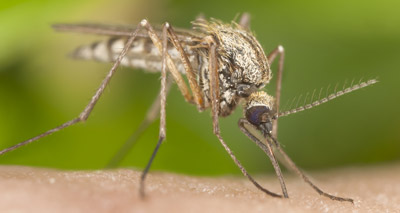
West Nile virus is usually spread through the bites of infected mosquitoes.
A mosquito, which was recently discovered in Kent, is considered to be the main carrier of West Nile virus in continental Europe, responsible for transmitting the virus from birds to humans. This is according to a letter from Public Health England published in Veterinary Record (Vol 175, No.11).
West Nile virus is usually spread through the bites of infected mosquitoes. Most cases of the disease are not serious and many people have flu-like symptoms, or no symptoms at all. In rare cases, the disease can lead to inflammation of the brain and spinal cord.
The mosquito, Culex modestus, was reported in three nature reserves in north Kent in 2010, six decades after the last report in the UK.
Follow-up surveys have been carried out by Public Health England and the University of Greenwich since 2012 to update existing knowledge on the distribution and status of the mosquito in Kent, Essex and Dorset.
Adult and immature sampling was conducted at five sites across north Kent last year. High densities of immature and adult Cx modestus mosquitoes were found in all areas. More than 90 per cent of all adult mosquitoes caught in the study were Cx modestus.
Further sites have been surveyed this year and immature Cx modestus have been found in Gravesend, Whitstable and Canterbury.
In the letter published in Veterinary Record, Public Health England said:
"This growing evidence of a wide distribution and high density of Cx modestus in Kent, and possibly Essex, highlights that Cx modestus is endemic to the Thames estuary marshes...
"Their potential role in future disease transmission and their known nuisance biting of humans requires further investigation to determine the presence of the virus in mosquitoes, birds and horses, as well as the full extent of their range or the occurrence of other cryptic populations in the UK.
"Entomological research needs to be conducted to understand the mosquito's biology, ecology and biting habits within its endemic range and the potential for biocidal control if required. These findings highlight the value in maintaining a network of mosquito traps to ensure that disease risk assessment keeps pace with the changing status of disease vectors."


 Defra has published guidance for the vet sector ahead of a proposed UK-EU Sanitary and Phytosanitary agreement.



