


What drives consumption of bat bushmeat?
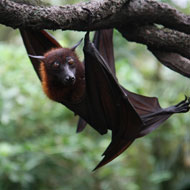
In Ghana bat bushmeat functions as both substance and luxury food.
Researchers from the University of Cambridge and the Zoological Society of London (ZSL) have surveyed almost 600 people across southern Ghana to discover what drives them to eat bat bushmeat and how they see the risks associated with the practice.
As with many emerging infections, Ebola is likely to have occurred due to human interaction with wild animals - most likely the practice of hunting and eating wild meat, commonly known as 'bushmeat'.
Widely hunted and eaten in Ghana, the Fruit Bat carries a risk of infection with 'zoonotic' pathogens - diseases transmitted from animal to man. Butchering, hunting and consuming wild animals for food can potentially transmit these infections through scratches, bodily fluids, bites and excrement.
Dr Olivier Restif, from the Department of Veterinary Medicine at the University of Cambridge, explains: “Knowing who eats bush meat and why, as well as how they perceive the risks, is important for informing both disease and conservation management plans."
The research team interviewed 577 people cross southern Ghana, including consumers, vendors and hunters of bat meat.
All of the hunters reported handling live bats and had been scratched, bitten or had come into contact with bat blood. None of the hunters reported using protective measures, such as gloves.
It was found that the most common method of preparing and cooking bat bushmeat was to smoke the bat before using it in a soup. Conflicting with reports from other countries, few uses of bat bushmeat were associated with traditional beliefs or medical practices. Indeed, in Ghana bat bushmeat appears to function as both substance and luxury food.
Focus groups were used by the researchers for more in-depth interviews to understand participant's likely reactions to interventions regarding bat bushmeat. They discovered that laws and fines alone are not effective solutions and are unlikely to induce change. Possible risks to health appeared to be be more deterrent than fines, with some respondents suggesting that disease risk could motivate them to stop.
Professor James Wood, who leads the research programme at the University of Cambridge, says: “Understanding both actual and perceived risk factors is vital. If a bat-borne zoonotic disease outbreak were to occur in Ghana, our information could prove invaluable in helping target those groups at greatest risk and in planning disease control measures.”
Dr Marcus Rowcliffe from ZSL adds: “Unfortunately, there may not be a simple way to minimise the risks of zoonotic spillover from bats. For example, bat hunting is a highly seasonal occupation and, like all bushmeat hunting, can be started and dropped at will, whereas rearing domestic animals – one possible sustainable solution for reducing bushmeat hunting – requires continuous activity throughout the year on a daily basis."
For a full breakdown of the research visit: http://www.cam.ac.uk/research/news/understanding-the-bushmeat-market-why-do-people-risk-infection-from-bat-meat


 Defra has published guidance for the vet sector ahead of a proposed UK-EU Sanitary and Phytosanitary agreement.



