


Cattle vets face up to consumer expectation
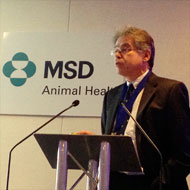
The vet is now a partner in the farm business with a 'say' in all aspects of management.
Welcoming delegates to the conference, president, Declan O'Rourke, outlined the major factors affecting cattle practice today. "There are issues with global food security," he said, "And a need for vets to be involved from 'farm to fork', together with a requirement to know the expectations of stakeholders."
Michael Seals, cattle farmer and chairman of Animal Health & Welfare Board for England discussed farmers' changing expectations of vets. Much depends on attitudes.
For progressive farmers and vets, things have moved on a great deal since the James Herriot era. Much of this has been driven by global price and environmental pressures that have forced the smaller producer out of production and encouraged trimming of margins.
The need for change has encouraged innovation; yet at the same time cattle populations have declined and yields have increased. The vet is now a partner in the farm business with a 'say' in all aspects of management – a significant move away from a fire brigade approach and the application of technical innovation in diagnosis, therapies, imaging and preventive medicine.
There are also many improvements to communication and disease surveillance; and the introduction of specialist cattle veterinary surgeons has matched the move in agriculture away from mixed farming.
Farming is now all about money and margins that are reflected in the costs of veterinary practice and the giving of advice to dairy farmers. This needs to be recognised by the farming industry. Government too has an influence and the farming industry should work in partnership with vets in a synergistic way.
Duncan Sinclair, agriculture manager from Waitrose, spoke about the expectations from his perspective. Major areas of growth in the business are coming from the opening of small high street stores and online delivery – 'bricks' versus 'clicks'.
There are about 50 dairy farmers supplying the firm through Dairy Crest and about 200 farmers supplying beef. Welfare, feed efficiency, farm risk assessment and environmental issues are all priorities for the company – for instance, no cattle are accepted that have been reared on slats – and the location of every supplier is held on a central database.
In the future, there is scope for much greater engagement with livestock vets and in 2014 the firm ran a couple of conferences for vets that included, amongst other things, delivering better animal performance but with a reduction in the use of therapeutic agents and an increased partnership approach.
Chairman of the Irish Consumers Association, Raymond O'Rourke, provided delegates with the expectations from a consumer lobby perspective. Much EU legislation is about giving the "average consumer" the opportunity to make an "informed choice".
If the present concerns about the use of antibiotics in animals takes off with consumers, the response could follow the same lines as the paranoia about food additives. A recent BEUC (www.beuc.org) report recommends, amongst other things, the restriction of antibiotics to therapeutic use and that the vets' right to prescribe should be decoupled from selling of antibiotics.
There will inevitably be restrictions on advertising of antibiotics, further warnings and guidance on labelling, and a tightening of their supply.


 Eligible members of BEVA will be able to vote for their Council team until Monday, 17 August 2026. Members will have received an election email on 17 July.



