


Horse hindgut model to be developed at Surrey
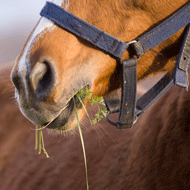
The hindgut model will allow scientists to find out how diet and medication change gut bacterial populations.
A laboratory model of a horse's hindgut will be created at the University of Surrey's School of Veterinary Medicines. Scientists hope to find out more about preventing disease using dietary intervention.
Hindgut bacteria allows horses to achieve high levels of athletic performance on low energy food, yet very little is known about how this bacteria varies in health and disease. It is known that disturbances to gut bacteria affect immunity, body weight, cancer risks and even the horse's behaviour.
"Bringing the horse's gut into the laboratory will allow us to characterise gut bacterial populations and to measure how these change in response to changes in diet and to medication such as antibiotics," said Chris Proudman, lead researcher and head of Surrey vet school.
"Intestinal disease (colic) is the single biggest cause of death in horses; this work will allow us to identify novel ways of maintaining a healthy gut through dietary intervention."
During the two-year study, Surrey researchers will utilise nuclear magnetic resonance technology at the University of Reading in order to changes in the bacterial metabolites. Researchers from the University of Liverpool will also collaborate by providing next generation gene sequencing.
Surrey's vet school welcomed its first cohort of students last month. Construction of the school's three state-of-the art buildings is due for completion in late summer 2015. The £45million vet school takes a "one health" approach to veterinary teaching, emphasising research, livestock medicine and veterinary pathology.


 Eligible members of BEVA will be able to vote for their Council team until Monday, 17 August 2026. Members will have received an election email on 17 July.



