


Ebola vaccine doses will be ready in 2015
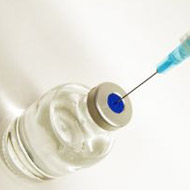
Trials of ebola vaccines have already begun in the US, UK and Mali.
Millions of doses of experimental Ebola vaccines will be available in 2015, the World Health Organisation (WHO) has announced.
The commitment was made during a WHO meeting last week with high-ranking government representatives from Ebola-affected countries and development partners, funding agencies, vaccine manufacturers, civil society and regulatory agencies.
During the meeting, the participants discussed and agreed on how to fast-track testing and deployment of vaccines in ample numbers to impact the Ebola epidemic.
The participants agreed that phase one clinical trials of the most advanced vaccines will be available by December 2014. They also agreed that efficacy trials in affected countries also begin in this timeframe, with protocols adapted to take into consideration safety and immunogenicity results as they become available.
Pharmaceutical companies developing the vaccines committed to scale-up production capacity for millions of doses to be available in 2015, with several hundred thousand to be ready before the end of the first half of the year. Regulatory authorities in both Africa and countries where the vaccines are manufactured committed to supporting this aim by working under extremely short deadlines.
It was also decided that community engagement is key and work should be increased urgently in partnership between local communities international organisations, NGOs and national governments.
WHO say that vaccines may have a major impact on further evolution of the epidemic. All parties will be working together to finalise the quickest approach for developing and distributing vaccines, so that effective treatments and prevention methods are welcomed and shared far and wide by the communities themselves.
Trials of vaccines have already begun in the US, UK and Mali, and are beginning in Germany, Gabon, Switzerland and Kenya to establish safety and dose level.
Marie-Paule Kieny, WHO's assistant director-general of health systems and innovation, said: "As we accelerate in a matter of weeks a process that typically takes years, we are ensuring that safety remains the top priority, with production speed and capacity a close second."


 Defra has published guidance for the vet sector ahead of a proposed UK-EU Sanitary and Phytosanitary agreement.



