


Ocean acidity poses 'serious and growing' risk
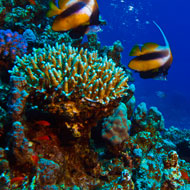
Sea creatures will be affected by rising acidity.
The UK's chief scientist, Professor Mark Walport, has warned that oceans face a serious and growing risk from carbon emissions from mankind, with the acidity of seawater increasing by around 25 per cent since the industrial revolution.
Increasing levels of carbon dioxide in the atmosphere are changing ocean chemistry, making seawater more acidic. CO2 reacts with water to form carbonic acid.
Researchers at the University of Exeter have found that sea creatures will be affected by this rising acidity, posing a threat to some as it creates conditions for animals to take up more coastal pollutants like copper.
Lugworms, the favourite bait of anglers, have been shown to suffer DNA damage as a result of copper from polluted sediments, causing reproductive issues. Larval survival was reduced by 24 per cent when exposed to both ocean acidification and copper.
Professor Walport warned that carbon emissions posed a serious risk.
"Carbon dioxide from our cars, homes and factories has made seawater 25 per cent more acidic. The changes represent a substantial risk to complex marine food webs and ecosystems. The current rate of ocean acidification is unprecedented within the last 65 million years."
Dr Ceri Lewis from the Biosciences team at the university, one of the authors of the research published in the journal Environmental Science and Technology, said: "It's a bit of a shock, frankly. It means the effects of ocean acidification may be even more serious than we previously thought. We need to look with new eyes at things which we thought were not vulnerable."


 Defra has published guidance for the vet sector ahead of a proposed UK-EU Sanitary and Phytosanitary agreement.



