


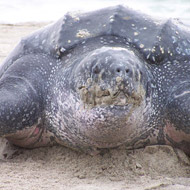
Four leatherback turtles strandings found off the coast of Scotland in the last month
An unusual number of leatherback turtles have been found stranded off the Scottish coast in the last month, the Scottish Marine Animal Strandings Scheme (SMASS) have revealed.
Four of the reptiles were found in the last fortnight, including an adult male which was reported entangled in creel ropes in deep water off Lochinver, North West Scotland.
The latest case, found in Dunbar, East Scotland, also appears to have been entangled in creel ropes.
A post-mortem examination was carried out on in Edinburgh on Monday.
Speaking to BBC News Scotland, Dr Andrew Brownlow, a pathologist for the Scottish Marine Animal Stranding Scheme, said it was "very unusual" to have four deaths in Scottish waters.
He said: "We found evidence of entanglement most likely from creel ropes due to bruising and impressions left in the tissue.
"There was also congestion in the lungs which is a consistent finding in animals that have run out of oxygen underwater."
"We also found a small amount, about 30cm, of fishing twine, which although it had nothing to do with its death, shows these animals are vulnerable to ingesting marine debris."
Leatherbacks are the largest turtles on earth and can grow up to two meters in length and exceed 900 kilograms. Once prevalent on every ocean expect the Arctic and Antarctic, the leatherback population is declining at an alarming rate due to egg harvest, fishery by catch and coastal development.
In light of the recent finds, the SMASS are urging people to spread the word to those around the coastline of Scotland and to keep a lookout for any other strandings.
Image (C) Rabon David, US Fish and Wildlife Service


 Defra has published guidance for the vet sector ahead of a proposed UK-EU Sanitary and Phytosanitary agreement.



