


Humans responsible for falling cheetah numbers, study suggests
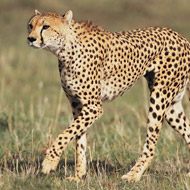
The study involved 19 free-roaming cheetahs from the Kgalagadi Transfrontier Park and the Karongwe Private reserve in South Africa.
Human activity, rather than competition with large carnivores, is the predominant reason for the decline of cheetahs, a study by the University of Pretoria suggests.
Before the study, it was commonly thought that cheetahs were declining partly as a result of large predators stealing their prey - thus lessening the availability of food and forcing them to expand more energy in search of food.
However, the authors of the study say that the number of fences erected on farms and placed around reserves imposes a huge restriction on their hunting opportunities, which has a ripple effect on their energy budgets.
The idea for the study was developed several years ago by Dr Michael Scantlebury in collaboration with Professor Nigel Bennett.
From their innovative research using a method called doubly labelled water (DLW) to determine energy expenditure in more rats, they thought it would be a good idea to extend the study to a more enigmatic species like the cheetah, to generate greater exposure for their ground-breaking findings.
DLW is a technique in terms of which so-called 'heavy' water is injected into an animal to evaluate its water loss through urination, defecation and perspiration in order to determine the amount of energy expended. During these activities, animals also produce carbon dioxide. By analysing the production of CO2, energy expenditure can be determined.
The study, which involved 19 free-roaming cheetahs from the Kgalagadi Transfrontier Park and the Karongwe Private reserve in South Africa, showed that the energy output during a high-speed cheetah chase after prey is not excessive, conflicting with the common belief. Instead, it revealed that the energy cheetahs use to locate food, far outweighs that used during a chase.
Professor Nigel Bennet, said: "Cheetahs, like all carnivores, tread an energetic tightrope and low energy has several negative consequences, which may affect the immune system, reproductive abilities and metabolism."
The researchers are now hoping to extend the study to other areas of the Savannah habitat such as parts of the Krugar National Park.


 Defra has published guidance for the vet sector ahead of a proposed UK-EU Sanitary and Phytosanitary agreement.



