


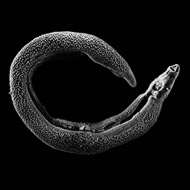
Finding paves the way to possible treatments to infectious diseases and allergies
Parasites use a Trojan horse subterfuge to suppress the immunity of their victims when causing inception, according to to a study by the University of Edinburgh.
The finding could lead to possible treatments for infectious diseases and allergies.
Scientists say that parasites are able to secrete tiny sealed packages of genetic material into the cells of their victims, in order to suppress the immune response to infection.
The packages, known as vesicles, mimic those that are produced naturally in most organisms to carry out everyday functions such as transporting nutrients and chemical messages to and from cells. The parasite uses vesicles to hide its material inside a seemingly friendly exterior, like a Trojan horse.
The study, published in Nature Communications, was carried out on a parasite found in mice and revealed that the material in the packages is able to interact with the mouse's own genes. It manipulates the cell's machinery to suppress products linked to immunity, and therefore reduces resistance to infection.
The researchers say that the research could lead to new strategies for treating diseases caused by parasitic worms. It may also offer a possible way to treat allergies, such as hayfever, because the immune mechanism that parasites block is also linked to allergic reactions.
The genetic material from the parasites can also be detected in human blood, suggesting that this could be used as a test to detect infection in people.
Dr Amy Buck, who led the study, said: "We can see for the first time that parasites can use packages to sneak their material into the cells of other organisms. We now can develop ways to target this with implications for the billions of people and animals as risk of infectious diseases and allergy."
Image (C) David Williams


 Defra has published guidance for the vet sector ahead of a proposed UK-EU Sanitary and Phytosanitary agreement.



