


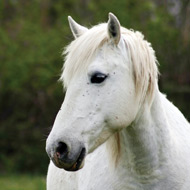
Bristol researchers believe PENS therapy could reduce clinical signs
A new therapy based on electrical nerve stimulation may be able to reduce the signs of headshaking in horses, Bristol researchers say.
Headshaking is caused by a neuropathic facial pain syndrome that can leave horses dangerous to handle and impossible to ride. It affects 10,000 to 20,000 horses in the UK.
Currently, there is no consistently safe and effective treatment and the condition can result in euthanasia.
A new study led by researchers from the University of Bristol suggests the symptoms may be reduced by percutaneous electrical nerve stimulation (PENS) - the same therapy used for humans with neuropathic pain.
Facial pain syndromes in people - particularly trigeminal neuralgia - bear striking clinical resemblance to headshaking in horses. A team from the University of Bristol worked alongside neurologists at Southmead Hospital Bristol to determine whether PENS therapy could offer a safe, effective and sustainable solution for horses.
Seven horses with trigeminal mediated headshaking were selected for the study. All horses were sedated during the procedure and an area the size of a needle-prick was desensitised with local anaesthetic.
A disposable PENS probe was inserted just underneath the skin adjacent to the nerve under ultrasonic guidance. The nerve was stimulated for 25 minutes and the probe was then removed and the procedure repeated on the other side. Three to four treatments were used and the therapy was repeated when signs recurred.
According to findings published in the Equine Veterinary Journal, all horses tolerated the procedure well. Of the seven horses involved in the trial, two developed a haematoma at the site on one occasion; two showed increased clinical signs for up to three days after the first treatment; six responded well after the first treatment and returned to the same level of ridden work as before the onset of symptoms; and five continued to respond to further treatment.
Commenting on the study, Veronica Roberts, senior clinical fellow in Equine Medicine at the University of Bristol, said: "Headshaking in horses is a major welfare issue and can be a significant cause of distress.
"Although it is clear that further work is required, including increasing the number of cases and refining the treatment procedures, the study shows that PENS therapy should be the first-line treatment for trigeminal-mediated headshakers, which have failed to respond to conservative treatment, such as nose-nets."
The paper can be found online at: http://onlinelibrary.wiley.com/doi/10.1111/evj.12394/abstract


 Eligible members of BEVA will be able to vote for their Council team until Monday, 17 August 2026. Members will have received an election email on 17 July.



