


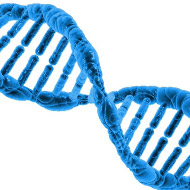
Technique will help scientists better understand DNA replication process
Researchers at the University of Edinburgh have devised a technique which helps them better understand the DNA replication process and to track where mistakes are likely to happen.
Their study, which focused on how DNA replicates every time a cell divides, shed light on previously unexplained patterns in how DNA changes over time. It also provided fresh insight into how the human genome has been shaped throughout evolution.
Furthermore, it revealed that some of the genetic switches that control when genes are activated are likely to be hotspots for DNA flaws, or mutations, to develop.
Dr Martin Taylor, who co-led the study at the MRC Human Genetics Unit, said: "We have been aware of striking patterns in how DNA changes for several years but couldn't explain why the patterns were there. This new work gives us a mechanism and revealed previously unseen patterns that are probably the most important finding, as they point to sites in our DNA that are likely to have a high rate of damaging mutations."
Co-author Professor Andrew Jackson, added: "Our research groups are very proud to have devised an important new method to track polymerase enzymes that copy our genome within the cell itself. This shows us that despite DNA replication being an amazingly accurate process, errors do occur that cluster at important sites in the genome. This new insight into a fundamental biological process has been made possible by combining cross-disciplinary computational and laboratory expertise at the IGMM."
The study, funded by the Medical Research Council, is published in the journal Nature.
Image (C) PublicDomainPictures


 Defra has published guidance for the vet sector ahead of a proposed UK-EU Sanitary and Phytosanitary agreement.



