


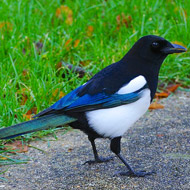
ARV can cause a range of diseases in poultry, captive and wild bird species
The first finding of disease in a wild bird caused by avian reovirus (ARV) has been confirmed by the GB Wildlife Disease Surveillance Partnership.
The discovery follows the death of a magpie in a garden in Buckinghamshire. Detailed laboratory testing and a post-mortem confirmed the presence of ARV, which had caused the bird severe necrosis of the liver and spleen, and was identified as its cause of death.
A further two magpies were observed with similar illness at different times at the same site. These birds are presumed to have died, however their carcasses could not be recovered for further investigation.
Commenting on the discovery, Richard Irvine, head of scanning surveillance at APHA, said: “Avian reoviruses can cause a range of disease presentations in poultry, captive and wild bird species, and until now ARV has not been reported as a disease of magpies or other wild birds in Great Britain.
“Continued veterinary surveillance activities, performed in partnership, help us to identify changes in the patterns of livestock and wildlife health, including novel disease presentations such as this.
“By raising awareness of this finding any threats posed to other wild birds or poultry can also be managed.”
Becki Lawson, research veterinarian at ZSL's Institute of Zoology, added: “ARV causes disease and mortality in wild corvid (crow family) species in North America and continental Europe. Due to the vigilance of the British public, this is the first identified case in the UK.
“We would like to appeal for any dead or sick garden wildlife (amphibians, reptiles, hedgehogs or garden birds) to be reported to us via www.gardenwildlifehealth.org.”
Image (C) Ian Kirk.


 Defra has published guidance for the vet sector ahead of a proposed UK-EU Sanitary and Phytosanitary agreement.



