


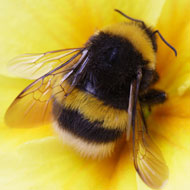
Experts call for urgent investment in research to protect bees
Urgent investment in research is needed to reverse the decline of bee populations, experts say. The warning comes as the first ever assessment of European wild bees revealed nearly one in 10 species are facing extinction. Meanwhile, the status of more than half remains unknown.
Researchers carried out the assessment as part of the IUCN European Red List of Bees. It is the first time information has been available on all 1,965 wild bee species in Europe.
However, 56.7 per cent of the species were classified "data deficient" - due to lack of experts, data and funding, their extinction risk could not be evaluated.
“This assessment is the best understanding we have had so far on wild bees in Europe,” said Jean-Christophe Vié, deputy drector of IUCN's Global Species Programme.
“However, our knowledge about them is incomplete as we are faced with an alarming lack of expertise and resources. Bees play an essential role in the pollination of our crops. We must urgently invest in further research in order to provide the best possible recommendations on how to reverse their decline."
Key findings from the assessment include:
- Nearly one in 10 bee species (9.2 per cent) are threatened with extinction
- More than five per cent are likely to be threatened in the near future
- Over a quarter (25.8 per cent) of Europe's bumblebee species face extinction
Each year, crop pollination provided by bees is worth an estimated €153 billion globally and €22 billion in Europe. More than 80 per cent of the main crops grown for human consumption in Europe need insect pollination to enhance the quality and yield of the product.
“Our quality of life – and our future – depends on the many services that nature provides for free,” said Karmenu Vella, EU environment, maritime affairs and fisheries commissioner.
“Pollination is one of these services, so it is very worrying to learn that some of our top pollinators are at risk! If we don’t address the reasons behind this decline in wild bees, and act urgently to stop it, we could pay a very heavy price indeed."
Bees face a number of threats, including habitat loss and degradation due to changing agricultural practices and increased intensive farming. Urban development and increased frequency of fires are among other threats.
Authors of the report are calling for more attention to be given to bees in European agricultural policies and the management of protected areas, as well as greater support for bee taxonomists and national and European survey programmes.
For more information, visit www.iucn.org


 Defra has published guidance for the vet sector ahead of a proposed UK-EU Sanitary and Phytosanitary agreement.



