


Study to 'significantly improve' pig welfare
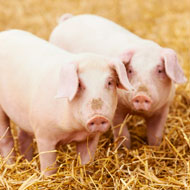
Pig Herd lameness is a serious welfare and economic problem in the UK.
A project which will look for markers identifying pigs at risk from a painful and degenerative joint disease is being led by Newcastle University.
The researchers say that being able to predict clinical lameness will help inform earlier pain alleviation. They add that it will also help in the selection for breeding of non-affected animals, which could gradually reduce the genetic pre-disposition to lameness.
Animals with degenerative joint conditions are likely to experience pain before they how any clinical signs or lameness.
In the UK, Pig Herd lameness is a serious welfare and economic problem which has been found to affect over 200,000 animals annually.
The project, funded by the Universities Federation for Animal Welfare (UFAW), will draw together researchers from Newcastle University, the University of Nottingham and Scotland's Rural College.
They will aim to identify molecular markers in the blood and joint tissue of pigs affected by degenerative joint disease. They will then study the relationship between the disease, specific biomarkers, and use motion capture software to record any subtle behaviour patterns that could be used to identify early signs.
If proven, pain and lameness biomarker data have the potential to be included within breeding selection objectives, both in generic population improvement programmes and the on-going screening of animals sold to production herd.
Dr Huw Gollege from the UFAW said: "UFAW is delighted to be able to support this important project which has the potential to significantly improve the welfare and health of farmed pigs."


 Eligible members of BEVA will be able to vote for their Council team until Monday, 17 August 2026. Members will have received an election email on 17 July.



