


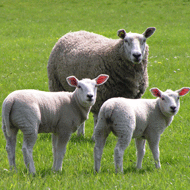
Young lambs at risk of developing fatal scour
There is a high risk of Nematodirus worm infection in young lambs occurring this time of year, the Agri-Food and Biosciences Institute (AFBI) are warning farmers.
Nematodirus infection results from the ingestion of large numbers of infective worm larvae present on contaminated pasture. For Nematodirus eggs to hatch, they must experience a period of cold weather, followed by warmer conditions.
Nematodirus eggs passed out by lambs last year will generally have remained unhatched on the ground throughout the winter. Given suitable conditions of moisture and temperature, they will undergo mass hatching this spring, resulting in a high risk of infection for lambs. Affected lambs develop profuse scour and can die quickly.
The infection normally only affects lambs between six and 12 weeks old. Clinical signs usually appear two weeks after ingestion of large numbers of larvae. Although rare, Nematodirus infection can occasionally cause problems in young calves, so farmers are also being urged to look out for signs of scour in calves from now through to May.
The AFBI has issued the following advice to farmers on how the disease can be avoided or reduced in lambs:
- Not grazing lambs on the same fields as those grazed by lambs of a similar age last year.
- Using anthelmintic drenches every two to four weeks. The interval between doses depends both on the particular anthelmintic used and the severity of infection. To date, only limited evidence has been found of drug resistance in Nematodirus to any of the available classes of anthelmintic.
Farmers are also being wanted not to confuse Nematodirus infection with coccidiosis - another disease which can cause severe scour in young lambs. As treatments are different, farmers are advised to seek accurate diagnosis and treatment though their veterinary surgeon.


 Defra has published guidance for the vet sector ahead of a proposed UK-EU Sanitary and Phytosanitary agreement.



