


Positive results for new drug tested at the RVC
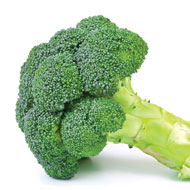
A chemical found in broccoli could offer a treatment for osteoarthritis, after a new drug has been successfully trialled for the first time at the Royal Veterinary College (RVC).
Eating cruciferous vegetables such as sprouts, cabbages and particularly broccoli has been found to ease the symptoms of osteoarthritis. However, patients would have to eat a substantial amount each day to see any real benefits.
The advantages of broccoli are due to sulforaphane, a compound released from the vegetable during digestion, which blocks certain enzymes that destroy joint cartilage. It also obstructs processes that cause the inflammation linked to osteoarthritis.
It had proved impossible to manufacture sulforaphane into a regular pill as it is an unstable molecule.
However, working alongside the RVC, UK pharmaceutical company Evgen Pharma has developed a stable, synthetic version of the compound and incorporated it into a new medicine called Sulforadex (SFX-01). Just a single dose of this medication provides as much sulforaphane as 2.5kg of broccoli.
Osteoarthritis affects nearly nine million people in the UK, costing the NHS over £5 billion a year. Other than pain relief and joint replacement, there is currently no effective treatment or cure. The RVC's professor of skeletal dynamics, Andrew Pitsillides said there is "massive" potential for SFX-01.
For the first time, the product has been trialled by the RVC using live laboratory mice prone to osteoarthritis.
Osteoarthritic mice treated with SFX-01 were shown to have substantially improved movement, gait balance and bone architecture, compared with the control group that did not receive treatment.
“These initial results are very positive for such an experiment and we have convinced ourselves that sulforaphane is a promising agent for the treatment of osteoarthritis," said Prof Pitsillides.
“However, the clinical development of sulforaphane has been held back by the fact that it is inherently unstable. Thus, SFX-01 is a major advance in this area.”
Further pre-clinical and then human clinical trials are needed now that the product is seen as a viable treatment for the painful joint condition.
Human trials are already underway to further investigate the anti-cancer and anti-inflammatory properties of sulforaphane.


 Defra has published guidance for the vet sector ahead of a proposed UK-EU Sanitary and Phytosanitary agreement.



