


Global warming threatens one in six species
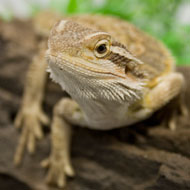
Amphibians and reptiles are predicted to have greater extinction risks.
One in six species could face extinction if global temperatures rise by 4°C, according to research by the University of Connecticut.
Published in Science, the study reveals that South America, Australia and New Zealand face the greatest extinction risks.
The study also shows that endemic species with smaller ranges and certain taxonomic groups, such as amphibians and reptiles, are predicted to have greater extinction risks.
It is hoped that this new understanding will help scientists prepare for, and hopefully prevent, climate-related loss of biodiversity.
Dr Mark Urban from the University of Connecticut analysed 131 predictions about extinction risks from climate change. Previous estimates suggest that anywhere from 0-54 per cent of species could be affected.
He found that the extinction risk from climate change is predicted not only to increase, but accelerate as temperatures rise.
If temperatures rise by 2°C, then global extinction risk will increase from 2.8 per cent to 5.2 per cent. However, if climate change was to continue on its current trajectory (4°C), then one in six species will face extinction.
Speaking to BBC News, Dr Urban said: "If the world does not come together and control greenhouse gas emissions and we allow the Earth to warm considerably we will face a potential loss of one in six species.
"Many species will be able to shift their ranges and keep up with climate change whereas others will not either because their habitat has disappeared or because they can't reach their habitat anymore."
Australia, new Zealand and South America are predicted to have higher extinction risks because they harbour many species adapted to live in habitats not found elsewhere.
Countries found to have the lowest extinction risks were North America and Europe.


 Defra has published guidance for the vet sector ahead of a proposed UK-EU Sanitary and Phytosanitary agreement.



