
Your data on MRCVSonline
The nature of the services provided by Vision Media means that we might obtain certain information about you.
Please read our Data Protection and Privacy Policy for details.

In addition, (with your consent) some parts of our website may store a 'cookie' in your browser for the purposes of
functionality or performance monitoring.
Click here to manage your settings.
If you would like to forward this story on to a friend, simply fill in the form below and click send.

Your friend's email:
Your email:
Your name:
 
 
Send Cancel

Pangolins return to wild after illegal goods seizure
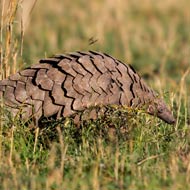
pangolin
Pangolins are hunted for their scales, which are used in traditional Chinese medicine.
Authorities release 94 animals in Sumatra

Indonesian authorities released 94 pangolins into the wild last week, after a huge seizure of illegal wildlife goods, Mongabay reports.

Five tons of confiscated pangolin meat were burned in the provincial capital of Medan. Also seized were the live animals and 77kg of pangolin scales.

According to Mongabay, which is part of the Guardian Environment Network, the environment and forestry minister Siti Nurbaya called for harsher punishments to be handed down by judges.

Currently, offenders spend an average of eight months in jail and pay Rp10 million, yet the maximum penalty is five years in prison and Rp500 million ($38,000).

A newborn pangolin's mother and two other animals died shortly after the raid. A team of vets decided the remaining 94 animals were able to return to the wild.

Pangolins' plate-like scales are made from keratin, the same substance as rhino horn. The species is in rapid decline due to demand for its scales in traditional Chinese medicine. Pangolin meat is also considered a delicacy in Vietnam and China.

According to the Zoological Society of London (ZSL), pangolins are the most illegally trafficked animal in the world, with more than a million traded in the past 10 years, despite a commercial trade ban in Asia.


 

Become a member or log in to add this story to your CPD history

Submissions open for BSAVA Clinical Research Abstracts 2026

News Story 1
 The BSAVA has opened submissions for the BSAVA Clinical Research Abstracts 2026.

It is an opportunity for applicants to present new research on any veterinary subject, such as the preliminary results of a study, discussion of a new technique or a description of an interesting case.

They must be based on high-quality clinical research conducted in industry, practice or academia, and summarised in 250 words.

Applications are welcome from vets, vet nurses, practice managers, and students.

Submissions are open until 6 March 2026. 

Click here for more...
News Shorts
Survey seeks ruminant sector views on antimicrobial stewardship

A new survey is seeking views of people working in the UK ruminant sector on how to tackle the challenge of demonstrating responsible antibiotic stewardship.

Forming part of a wider, collaborative initiative, the results will help identify the types of data available so that challenges with data collection can be better understood and addressed.

Anyone working in the UK farming sector, including vets and farmers,is encouraged to complete the survey, which is available at app.onlinesurveys.jisc.ac.uk

