


Scotland urged to stand firm on tail docking ban
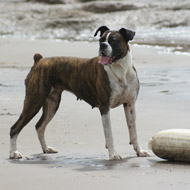
"We have carefully considered all the evidence and remain convinced that tail docking in dogs is detrimental to animal welfare."
The British Veterinary Association (BVA) has warned the Scottish Government about the welfare detriment involved in tail docking dogs.
Speaking at the BVA's annual Scottish dinner, BVA's president John Blackwell praised Scotland for leading the way in many areas of animal welfare, but urged the Scottish Government to resist lobbying to reinstate the practice of tail docking in the country:
“While BVA and BVA Scottish Branch welcome all these positive steps and the clear leadership the Scottish Government has shown on many issues, we would also advise that we need to be careful not to lose ground already gained. Tail docking of dogs is one of the areas where we need to be watchful.
"I would like to take this opportunity to remind the Cabinet Secretary that both BVA and BVA Scottish Branch are against tail docking of dogs. We have carefully considered all the evidence and remain convinced that tail docking in dogs is detrimental to animal welfare. This mutilation has no place in a modern, forward thinking society and I would urge him to resist lobbying by other groups to reverse the Scottish Government’s position on this.”
Scotland was praised for its high standards of welfare at slaughter, having very little non-stun slaughter. However, Mr Blackwell warned that challenges still remain - such as the lack of cow sow slaughter facilities in Scotland - and that the country needed to ensure that the amount of non-stun slaughter did not rise:
"Animal welfare means welfare throughout an animal’s entire life, whatever their relationship to humans. It is particularly important to vets who work with livestock that the animals we breed for consumption are humanely treated throughout their lives including their death. Having reached well over 100,000 signatures for our petition to end non-stun slaughter, we will continue to pursue this with all UK governments.
“Scotland leads the way again with non-stun slaughter, having only a very small amount of non-stun slaughter in the poultry sector. Even though very small, we would like to see an end to this. But whilst it is allowed in Scotland under the derogation, we wish to see refinement and an acceptance of reversible head-only stunning in poultry alongside a balancing of supply and demand for those communities requiring non-stun products and labelling to allow informed choice by those who don’t."


 Defra has published guidance for the vet sector ahead of a proposed UK-EU Sanitary and Phytosanitary agreement.



