
Your data on MRCVSonline
The nature of the services provided by Vision Media means that we might obtain certain information about you.
Please read our Data Protection and Privacy Policy for details.

In addition, (with your consent) some parts of our website may store a 'cookie' in your browser for the purposes of
functionality or performance monitoring.
Click here to manage your settings.
If you would like to forward this story on to a friend, simply fill in the form below and click send.

Your friend's email:
Your email:
Your name:
 
 
Send Cancel

Anti-fly-grazing law comes into force
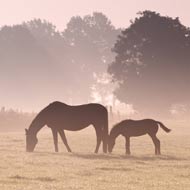
grazing horses
More options are now available for removing fly-grazed horses, aside from public sale.

Bill gives landowners and local authorities greater powers

A bill to tackle fly-grazing has come into force in England, bringing the country into line with Wales, where similar legislation was introduced last year.

Under the new Control of Horses Act, landowners and local authorities have greater powers to remove horses being fly-grazed illegally. Landowners are now only required to keep such horses on their land for four days, rather than the previous two weeks.

More options are now available for removing fly-grazed horses, aside from public sale. They can now be gifted to a charity, privately sold or humanely euthanised if appropriate.

The new legislation is the result of a private members' bill by Julian Sturdy, MP for York Outer. Similar legislation brought in by the Welsh Government is thought to have exacerbated the problem of fly-grazing in England.

“This law will make a big difference to horse welfare as landowners can more quickly deal with fly-grazing animals, instead of them having to leave them on unsuitable land without grazing, shelter or additional food, which is all too often the case," commented David Bowles, the RSPCA's assistant director of public affairs.

Charities estimate there are around 3,000 horses being fly-grazed in England. Such horses are often left to fend for themselves without sufficient food, water and shelter, making them vulnerable to serious and preventable diseases. Often the land lacks suitable fencing around the perimeters meaning horses can escape onto busy roads and motorways.


Become a member or log in to add this story to your CPD history

RCVS announces 1CPD app update

News Story 1
 The RCVS has announced a new version of its 1CPD mobile app, with enhanced features for veterinary surgeons and veterinary nurses to record their continuing professional development.

The mobile app includes a new 'what would you like to do?' shortcut for frequent tasks, a notification badge, and the ability to scan a QR code from the home screen to easily record an activity.

Users will be prompted to update the app from the App Store or Google Play the next time they log in. For more information, visit RCVS.org.uk 

Click here for more...
News Shorts
Nominations open for RCVS and VN Council elections

The nomination period for the 2026 RCVS Council and VN Council elections is now open, with three veterinary surgeon seats and two veterinary nurse seats available.

Prospective candidates can download an information pack and nomination form from the RCVS website. Individuals can nominate themselves for the elections, with the results to be announced in the spring.

Clare Paget, the recently appointed RCVS Registrar and elections returning officer, said: "If you want to play your part in influencing and moulding how the professions are regulated, and making key decisions on matters of great importance to your peers, the public and animal health and welfare, please consider standing for RCVS Council or VN Council next year."

Nominations close at 5pm on Saturday, 31 January 2026.

