


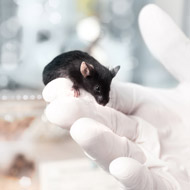
Technology may significantly reduce need for animal testing
Silicon chips which mimic human organs have won the Design of the Year Award from the Design Museum in London.
Developed by scientists at Harvard University's Wyss Institute, the 'organ-on-a-chip' technology seeks to revolutionise the way medicines are developed and tested - without the use of animals.
As the Wyss Institute explains: “They [organs-on-chips] stand to significantly reduce the need for animal testing by providing a faster, less expensive, less controversial and accurate means to predict whether new drug compounds will be successful in human clinical trials”.
The technology borrows from processes used in the computer chip industry and consists of see-through micro-devices around the size of a fingernail lined with living human cells.
Initial studies have been promising and suggest this technology can accurately replicate the structure, function and behaviour of the gut, liver and lung.
Welcoming the technology, RSPCA's senior scientific officer Barney Reed said: “As well as the significant ethical and animal welfare concerns associated with the use of animals in research, there is currently a lot of discussion relating to the scientific limitations of many traditional animal models and tests. There is a growing acceptance that the system of drug development needs to focus on moving to cheaper, faster and more reliable methods.
“The organs-on-a-chip technology has really caught the imagination and offers a tantalising glimpse of where we might be in just a few years time. A number of pharmaceutical companies are now exploring this stunning new technology to see how they can use it to increase the number of effective medicines and treatments they develop and to significantly reduce the numbers of animals they are using in this process”.
The technology is still in development, but it is hoped that the chips will eventually be linked up to form a 'body-on-a-chip' which can be personalised to the tissues and cells of a particular individual.
Barney concludes: “This wonderful example illustrates what could be achieved when innovative thinkers refuse to accept that there can’t be ‘another way’ of doing things and challenge entrenched thinking and the status quo, and when these progressive visions are given the necessary resourcing”.


 Defra has published guidance for the vet sector ahead of a proposed UK-EU Sanitary and Phytosanitary agreement.



