


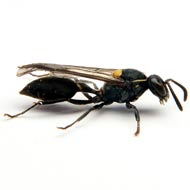
Study shows how toxin selectively attacks cancer cells
Scientists say the venom of a Brazilian wasp may one day be used in the fight against cancer.
New research reveals for the first time how a toxin contained in the venom is able to attack cancer cells, leaving normal cells unharmed.
To protect itself from predators, the social wasp Polybia paulista produces a venom containing the toxin MP1 (Polybia-MP1).
Laboratory testing has shown the toxin can inhibit the growth of bladder and prostate cancer cells, as well as the multi-drug resistant leukaemic cells.
Until now it was not understood how MP1 is able to do this without damaging normal cells. But according to new research published in the Biophysical Journal, the toxin selectively attacks lipids that are abnormally distributed across the surface of cancer cells. In a matter of seconds, this creates gaping holes, allowing molecules that are vital for cell function to escape.
Co-author Dr Paul Beales from the University of Leeds said this approach to treatment would be "an entirely new class of anti-cancer drugs" and could help develop new combination therapies, where multiple drugs are used at the same time to attack different parts of the cancer cells.
In future, the researchers plan to alter the amino acid sequence of MP1 to find out more about the peptide's structure, increasing its potential for clinical purposes.
"Understanding the mechanism of action of this peptide will help in translational studies to further assess the potential for this peptide to be used in medicine," Dr Beales explained.
"As it has been shown to be selective to cancer cells and non-toxic to normal cells in the lab, this peptide has the potential to be safe, but further work would be required to prove that."
Image © Prof. Mario Palma/Sao Paulo State University


 Defra has published guidance for the vet sector ahead of a proposed UK-EU Sanitary and Phytosanitary agreement.



