


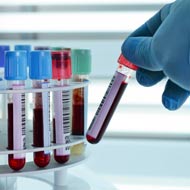
ViroCap could be used to detect deadly viruses
US scientists say they have created a test that can detect 'virtually any virus that infects people and animals'.
The test, called ViroCap, can identify viruses that are not found by standard tests based on genome sequencing, according to research published in the journal Genome Research.
It could even be used to detect deadly viruses such as Ebola, Marburg and severe acute respiratory syndrome (SARS), in addition to more routine viruses including norovirus.
“With this test, you don’t have to know what you’re looking for,” said senior author Gregory Storch. “It casts a broad net and can efficiently detect viruses that are present at very low levels.
"We think the test will be especially useful in situations where a diagnosis remains elusive after standard testing or in situations in which the cause of a disease outbreak is unknown."
ViroCap sequences and detects viruses in patient samples. According to researchers, it is just as sensitive as polymerase chain reaction (PCR). However, even the most extensive PCR test can only screen for a maximum of around 20 similar viruses at the same time.
Researchers evaluated the test using biological samples such as blood, stools and nasal secretions from patients at St Louis Children's Hospital.
In the first set of samples, standard testing that relies on genome sequencing found viruses in 10 out of 14 patients. The new test found viruses in the four children that standard testing had missed.
The standard test failed to detect common viruses such as influenza B, a cause of seasonal flu; parechovirus, a mild gastrointestinal and respiratory virus; herpes virus 1, which causes cold sores in the mouth; and the varicella-zoster virus, which causes chickenpox.
In a second group of children, the new test found an additional seven viruses that standard testing had not picked up. All in all, the number of viruses detected in the two patient groups jumped by 52 per cent when the new test was used.
The test also allows subtypes of viruses to be detected easily - the study showed that while standard testing could identify a virus as influenza A, the new test identified it as H3N2.


 Defra has published guidance for the vet sector ahead of a proposed UK-EU Sanitary and Phytosanitary agreement.



