


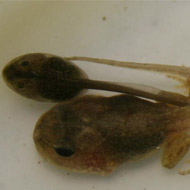
Some waiting up to a year to turn into frogs
Some tadpoles delay developing into frogs for an entire year after hatching, probably because they can gain advantages by waiting, according to a study led by the University of Edinburgh.
Tadpoles normally hatch in spring and turn into frogs by autumn. However, researchers have noted that some tadpoles are putting off metamorphosis until the following spring.
The experts suggest that seasonal conditions may not be the driving force, but instead tadpoles gain two distinct advantages by waiting until after winter:
Firstly, the extra time allows them to grow bigger - so by the time the tadpoles change into frogs they are well equipped to find food and defend themselves
Secondly, tadpoles that live through winter can become frogs in the following spring, giving them a head start over that season's tadpoles in competing for resources on land.
In the study, scientists studied hundreds of common European frog tadpoles in the laboratory. The tadpoles were reared under varying temperature conditions and with different amounts of available food, mimicking a range of natural environments. They found that food and temperature are important, but these are not the only factors affecting the timing of metamorphosis.
The researchers discovered that tadpoles kept in low temperatures with the shortest supply of food were the most likely to wait until after winter to become frogs. However, tadpoles living in cold environments in the wild are known to metamorphose before winter.
Little evidence exists about whether tadpoles with short food supplies focus their energy on developing into frogs instead of growing bigger. In some examples, tadpoles were big enough to change by autumn, but did not.
Lead author Dr Patrick Walsh said: "Reports increasingly point towards tadpoles surviving through winter in their ponds and becoming frogs the following spring.
"Our findings suggest that temperature and food are not the primary causes, and that tadpoles delaying metamorphosis have a double advantage of being more developed and arriving sooner than that year's tadpoles."
The research, published in the Journal of Zoology, was supported by the Carnegie Trust and the Glasgow Natural History Society.
Image (C) Patrick Walsh


 Eligible members of BEVA will be able to vote for their Council team until Monday, 17 August 2026. Members will have received an election email on 17 July.



