


Wildlife 'already affected by climate change'
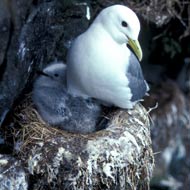
Climate change is a factor in the 70 per cent decline in kittiwakes, the RSPB says.
Europe's wildlife is already being impacted by climate change and the effects are set to get worse over the next hundred years, according to a new report by the RSPB.
The charity has reviewed and compiled the available evidence for its report, The Nature of Climate Change. It shows how some of Europe's best-loved wildlife is already under threat.
RSPB's director of conservation Martin Harper, said: "Climate change is the greatest long-term threat to people and wildlife. We are already seeing its impacts and, alongside other pressures on land and at sea, our wildlife is increasingly at risk."
Extreme weather events, for example, are becoming more frequent and intense due to climate change. Severe weather can be damaging for wildlife; wet and windy springs can cause mass deaths in shags, a cormorant-like seabird.
Wildlife is also having to move northwards and uphill to find suitable conditions as climates change. According to the RSPB, species may be forced to move into areas where there is no suitable habitat.
Habitats must be provided to enable wildlife to move, the charity added. By 2100, a third of Europe's bumblebee species could lose 80 per cent of their range.
A key part of addressing this is the creation of new protected areas, whilst managing the existing areas and making the wider landscape more wildlife-friendly.
Climate change is also causing species to diverge in terms of numbers, location and timings. Changing sea conditions in the North Sea are having a knock-on result for plankton populations, affecting their predator, the sand eel, which is a source of food for kittiwakes (a small gull).
RSPB says climate change is therefore a factor in the 70 per cent decline in the UK's kittiwake populations.
Mr Harper added: "The report has a clear message that the world's governments need to act on fast, to limit climate change."
Read The Nature of Climate Change: http://www.rspb.org.uk/Images/natureofclimatechange_tcm9-409709.pdf


 Eligible members of BEVA will be able to vote for their Council team until Monday, 17 August 2026. Members will have received an election email on 17 July.



