


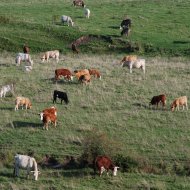
Extreme weather this winter could affect cattle
Farmers are being warned that extreme weather this winter could result in their cows suffering from magnesium deficiency.
Scotland's Rural College (SRUC) advises farmers with outwintered stock, especially cows, to make sure they receive a daily magnesium supplement.
The condition, often known as 'grass staggers', usually affects grazing cattle in spring, but overwintered cows fed on silage can also suffer.
"Magnesium is essential for metabolism and the requirement increases at times of stress," explains veterinary investigation officer George Caldow.
"Furthermore cattle rely on a steady intake of magnesium and heavy rainfall can interfere with the normal food intake of cows so that magnesium intake becomes critical."
On the whole, farmers have countered the recent extreme weather by making sure their dry, pregnant spring claviers are well fed with big bale silage. This is usually more than enough to meet the cow's energy requirements but can fail to meet their specific needs for some minerals and vitamins.
"Although cattle are well designed to withstand very low temperatures, they are less well adapted to continuous rain which is what they have had to face over the last four to five weeks," Mr Caldow adds.
"This continual drain on their heat reserves when coupled with a deficiency of magnesium can result magnesium tetany. While all producers are well aware of the risk of tetany to cows suckling calves at grass in the spring, it is not commonly expected in the middle of winter!
"Our advice is therefore for all producers with outwintered stock, particularly cows, to ensure they are adequately supplemented with a suitable magnesium supply daily."


 Eligible members of BEVA will be able to vote for their Council team until Monday, 17 August 2026. Members will have received an election email on 17 July.



