


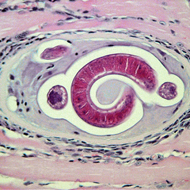
Study sheds new light on parasitic worm infections
New insights into the way Trichinella worms use their host's immune system for survival could help with the battle against parasitic infections, scientists believe.
Cornell University researchers have found that the presence of white blood cells called eosinophils helps these parasites to grow, as the immune system provides food and shelter within the muscle tissue.
Trichinella infestation can lead to trichinosis, or trichinellosis, which causes a range of symptoms from headaches and fever to heart and breathing problems. In severe cases, it can even be fatal. The disease is acquired by eating raw or undercooked meat containing Trichinella larvae.
Past research at Cornell has shown that eosinophils block the production of nitric oxide - a gas produced by the immune system that is toxic to Trichinella.
A recent follow up study published in the journal PLOS Pathogens, has revealed that eosinophils are actually necessary for Trichinella worms to thrive.
"We found that muscle tissue is mounting a repair response, like it would against an injury," said senior author Judy Appleton. "Then the eosinophils are coming in, presumably to help with the repair, but coincidentally they help the parasite grow. We found evidence of a shift in metabolism in the muscle that would provide more glucose to the worm."
Researchers believe this may also be true of other worms and these new insights could help in the fight against parasitic infections, which affect around two billion people worldwide.
Appleton added: "When you vaccinate for an infectious disease, you’re trying to induce a certain kind of immune response. Understanding the roles these blood cells can play will help in developing effective therapeutics that use the immune system."
Image (c) Daniel Beiting


 Defra has published guidance for the vet sector ahead of a proposed UK-EU Sanitary and Phytosanitary agreement.



