
Your data on MRCVSonline
The nature of the services provided by Vision Media means that we might obtain certain information about you.
Please read our Data Protection and Privacy Policy for details.

In addition, (with your consent) some parts of our website may store a 'cookie' in your browser for the purposes of
functionality or performance monitoring.
Click here to manage your settings.
If you would like to forward this story on to a friend, simply fill in the form below and click send.

Your friend's email:
Your email:
Your name:
 
 
Send Cancel

Ebola study reveals long-term health effects
ebola
During the Ebola outbreak in West Africa more than 28,600 people were infected, of which 11,300 died, leaving 17,000 survivors.

Most survivors still showing brain symptoms
 
A new study of 82 Ebola survivors has revealed that most were still suffering from neurological abnormalities more than six months are the initial infection.

US researchers from the National Institute of Neurological Disorders and Stroke (NINDS) studied a group of survivors from Liberia, with an average age of 35.

The most common ongoing symptoms they found were weakness, headaches, memory loss, depressed mood and muscle pain. Two survivors were suicidal and another was having hallucinations.

Common neurological signs found on examination were abnormal eye movements, tremors and abnormal reflexes.

Researchers are in the process of evaluating controls to determine which of these signs are Ebola-specific.

During the Ebola outbreak in West Africa more than 28,600 people were infected, of which 11,300 died, leaving 17,000 survivors.

Study author Lauren Bowen, from the National Institute of Neurological Disorders and Stroke, said: "It is important for us to know how this virus may continue to affect the brain long term".

The research forms part of a larger Prevail III study which follows patients who have had prior Ebola virus diseases, as well as their close contacts. The preliminary findings will be presented at the American Academy of Neurology's 68th annual meeting in Vancouver in April this year. 

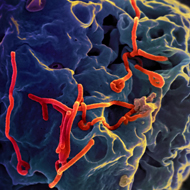
Image credit: NIAID/CC BY 2.0

 

Become a member or log in to add this story to your CPD history

Submissions open for BSAVA Clinical Research Abstracts 2026

News Story 1
 The BSAVA has opened submissions for the BSAVA Clinical Research Abstracts 2026.

It is an opportunity for applicants to present new research on any veterinary subject, such as the preliminary results of a study, discussion of a new technique or a description of an interesting case.

They must be based on high-quality clinical research conducted in industry, practice or academia, and summarised in 250 words.

Applications are welcome from vets, vet nurses, practice managers, and students.

Submissions are open until 6 March 2026. 

Click here for more...
News Shorts
Survey seeks ruminant sector views on antimicrobial stewardship

A new survey is seeking views of people working in the UK ruminant sector on how to tackle the challenge of demonstrating responsible antibiotic stewardship.

Forming part of a wider, collaborative initiative, the results will help identify the types of data available so that challenges with data collection can be better understood and addressed.

Anyone working in the UK farming sector, including vets and farmers,is encouraged to complete the survey, which is available at app.onlinesurveys.jisc.ac.uk


