


Can a leopard change its spots?
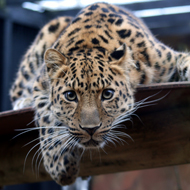
The team discovered they could manipulate cells to change their natural appearance and behaviour.
We've all heard the adage 'a leopard never changes its spots', but new research from the University of Edinburgh suggests it could be possible in the laboratory.
Using genetic modification, scientists were able to 're-program' cells in kidney tissue samples to spontaneously form spots or stripes. This process has not been seen before in the lab and could have implications for human medicine.
The team discovered they could manipulate cells to change their natural appearance and behaviour. They used tissue samples to alter the behaviour of cells that would usually be arranged randomly within the kidney.
Researchers believe their findings could pave the way for the development of artificial tissues that could be used to treat human disease.
"Developing therapies in the near future will require getting cells to organise themselves so to perform specific tasks," said Professor Jamie Davies.
"We have demonstrated that it is possible to programme cells to organise themselves in new ways. This opens the door to using designer patterns to control the development of artificial tissues that could be taught to mimic the way human organs are built."
The Edinburgh team created artificial genetic code and introduced two types of kidney cells, as well as fluorescent proteins that turned the cells either red or green.
Cells separated into stripes or patches, which seemed to be driven by the cells' preference to sit beside another cell of the same colour and type. Researchers say this occurred because each colour cell expressed different kinds of molecule on the surface, so cells attached more securely to another of the same colour.
The full study has been published in the journal Scientific Reports.


 Defra has published guidance for the vet sector ahead of a proposed UK-EU Sanitary and Phytosanitary agreement.



