


PhD student samples teeth for microwear
Scientists have reconstructed the changing diets of elephants by studying surface textures on their teeth.
Research published in Quaternary International describes a cutting-edge analysis of fossilised elephant teeth from China.
Zhang Hanwen, a PhD student at the Univeristy of Bristol, sampled 27 teeth for tiny patterns of wear called 'microwear'. He then analysed the textures to identify what the elephants ate in the days and weeks before they died.
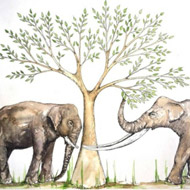
The study found that while two extinct elephants from Southern China - Stegodon and Sinomastodon - primarily ate leaves. The third, Elephas (which includes modern Asian elephants) was more of a generalist, consuming a wider variety of vegetation.
Sinomastodan and Stegodan coexisted in Southern China between 2.6 and one million years ago. However, when Sinomastodan became extinct, the Stegodan became the dominant elephant of Southern China for the rest of the Pleistocene (the time of the great Ice Ages).
Hanwen explains that around this time there may have been a prolonged, fluctuating period of environmental deterioration. "Forests were on the decline, alongside many of the more archaic mammal species that inhabited them," he said.
"The highly evolved molars of Stegodon, with multiple enamel ridges, might have allowed it to browse on its preferred foliage in a more efficient way, thus out-competing Sinomastodon, which preferred the same diet, but had less sophisticated molars consisting of large, blunt, conical cusps.”
Hanwen also believes the study also suggests that Stegodan and Elephas subsequently coexisted for long periods in Southern China by eating different things. Stegodan remained a specialist foliage feeder, whereas Elephas had a much more Catholic feeding habit, incorporating both grazing and browsing.
Image (C) Nicola Heath


 Eligible members of BEVA will be able to vote for their Council team until Monday, 17 August 2026. Members will have received an election email on 17 July.



