


Project offers clues on Isle of Man wallabies
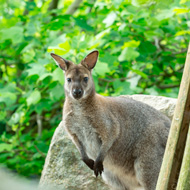
"It is likely the gene pool is much larger than just the genes from the often quoted 'pair of escapees'".
Despite being native to Australia, a population of wild red-necked wallabies call the Isle of Man home. Their presence is often attributed to 'a pair of escapees' from a wildlife park in the 1970s.
Now, the population is said to be thriving, with 100 individuals reported to be living on the island.
New research suggests there may have been more escapes than were reported, meaning the gene pool is larger than previously thought.
Paige Havlin, a graduate of Queen's University Belfast, carried out the wallaby project for her dissertation thesis.
She found that, although many people believe the original wallabies escaped from Glen Helen Zoo, evidence shows there were numerous wallaby escapes from the Curraghs Wildlife Park. In 1989, eight of the creatures are reported to have dug under their enclosure and escaped.
Speaking to Isle of Man Today, Paige said that while it is difficult to pinpoint exactly when the wild population established, it is "highly probable" it originated from the wildlife park.
Another common myth is that they suffer from blindness due to inbreeding. But according to Paige, very few of the wallabies she observed seemed to have any blindness and those that did usually had other additional ailments, such as inner ear infection.
Using camera traps, she managed to gather over 1,000 videos of wallabies in the Ballaugh area, in addition to hundreds of videos from members of the public.
"Given that it is likely there have been more escapes over the years than has been reported," she explained to Isle of Man Today, "it is likely the gene pool is much larger than just the genes from the often quoted 'pair of escapees', and there have been no obvious signs of the effects of inbreeding.
"A genetic study of the population, though, would be required to fully dispel this myth."


 Eligible members of BEVA will be able to vote for their Council team until Monday, 17 August 2026. Members will have received an election email on 17 July.



