


Scientists isolate pathogen from mosquitoes
Scientists in the United States have discovered a new "multicomponent" virus that can infect animals.
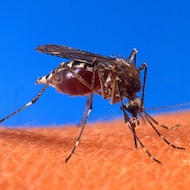
Writing in the journal Cell Host & Microbe, researchers describe how they isolated the new pathogen - Guaico Culex virus (GCXV)- from several species of mosquitoes in Central and South America.
According to first author Jason Ladner, of the US Army Medical Research Institute of Infectious diseases (USAMRIID), GCXV does not appear to infect mammals.
But the team also isolated a related virus - Jingmen tick virus (JMTV) - from a red colobus monkey in Uganda. Further analysis revealed that both GCXV and JMTV belong to a highly diverse and newly discovered group of viruses called the Jingmenvirus group.
This suggests the host range of this virus group is diverse and highlights the potential relevance of these viruses to animal and human health, the researchers say.
“Animal viruses typically have all genome segments packaged together into a single viral particle, so only one of those particles is needed to infect a host cell,” explains Dr Ladner.
"But in a multicomponent virus, the genome is divided into multiple pieces, with each one packaged separately into a viral particle. At least one particle of each type is required for cell infection.”
In the study, the team extracted and sequenced viruses from mosquitoes collected around the world. They named the new virus after the Guaico region of Trinidad, where the mosquitoes that contained it were first found.
While the team also found evidence of a Jingmenvirus in the blood of a monkey, the animal showed no signs of disease when they took the sample, so it is not known whether the virus had a pathogenic effect.


 Defra has published guidance for the vet sector ahead of a proposed UK-EU Sanitary and Phytosanitary agreement.



