


New field test for bluetongue virus
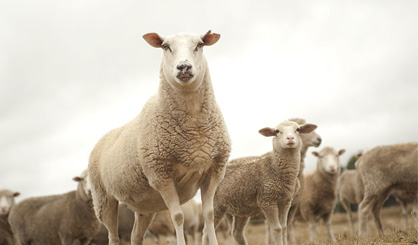
Scientists say there is an urgent need for research into quick diagnosis of all types of BTV.
A field test for Indian strains of bluetongue virus (BTV) has been developed by scientists in the UK and India, who say it will save lives and reduce the wider impact of BTV by providing rapid, reliable diagnosis.
Prior to this new development the only suitable tests were confined to the laboratory, resulting in delayed diagnosis.
BTV is a viral disease that infects cattle, sheep and goats. In India, it has a direct impact on subsistence level sheep farmers in southern states.
Vaccinating against the virus is particularly difficult as there are currently 27 serotypes of the virus and each can vary depending on the area from which it was isolated.
These variations, or topotypes, are divided into two groups - eastern and western. Several serotypes that are circulating in India belong to both the eastern and western topotypes. A vaccine for one serotype or topotype does not necessarily protect against the others.
Scientists were keen to develop a test that allowed fast, accurate diagnosis to ensure appropriate disease control policies can be implemented quickly.
Researchers from the Pirbright Institute, alongside the LLR University of Veterinary and Animal Sciences in India, have produced two new tests, both of which can differentiate between the serotypes and topotypes that are circulating in India.
Researchers used the loop-mediated isothermal amplification (LAMP) technique - a portable test that can be used quickly and easily in the field. It is similar to a recent field test for African horse sickness, which was developed by a different team of Pirbright scientists.
Commenting on the latest test, Dr Simon Carpenter, head of the institute's vector-borne disease programme, said: "This test paves the way for accurate and effective targeting of vaccination that will play a significant role in helping improve livestock productivity for some of the poorest people in India."
Scientists say there is an urgent need for research into quick diagnosis of all types of BTV, as the virus can rapidly re-organise its genetic material, creating more variations between the serotypes and topotypes.


 Eligible members of BEVA will be able to vote for their Council team until Monday, 17 August 2026. Members will have received an election email on 17 July.



