


Study evidences likely cause of mobility and skeleton formation
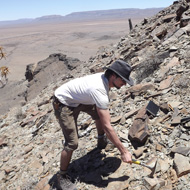
The University of Oxford have conducted fieldwork in Namibia to support a hypothesis surrounding the emergence of more complex, skeletal animals 550 million years ago. The study addresses the puzzling issue of why more complex animals took so long to emerge.
Geochemists, palaeoecologists and geologists looked at rock samples containing fossils from the ancient seafloor in the Nama Group to try and ascertain the chemical composition of the water when they were formed.
Samples from anoxic and poorly oxygenated regions were compared with those from the well-oxygenated surface waters and demonstrated that oxygen availability was fundamental in the development of skeletons, mobility and many other identifiable features of modern animals.
Dr Rosalie Tostevin, a postdoctoral researcher in the Department of Earth Sciences at Oxford University and lead author said: “By teasing apart waters with high and low levels of oxygen, and demonstrating that early skeletal animals were restricted to well oxygenated waters, we have provided strong evidence that the availability of oxygen was a key requirement for the development of these animals.”
The evolution of early Cloudina, Namacalathus and Namapoika animals prior to the Cambrian period has long puzzled scientists and Dr Tostevin added: “We looked at the last 10 million years of the Proterozoic Eon, when although the earth looked very different, some of the major animal groups we recognise today began to appear. Our results tell us that there is a link between the environment and the evolution that took place.”
The study has been published in the journal Nature Communications.
Image © Rosalie Tostevin


 Defra has published guidance for the vet sector ahead of a proposed UK-EU Sanitary and Phytosanitary agreement.



