


EU takes UK to court over harbour porpoises
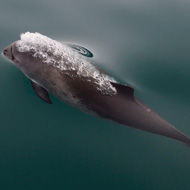
Owing to the species unfavourable status in the EU, 13 member states have designated sites for its protection.
The European Commission is taking the UK to court over its failure to propose protection sites for harbour porpoises.
EU legislation requires member states to propose a list of sites for a number of species and habitats, ensuring they are protected from threats which could seriously harm them, and helping to maintain and restore them in the EU.
Regularly found in UK waters, the harbour porpoise is a small whale closely related to the family of oceanic dolphins.
Owing to the species unfavourable status in the EU, 13 member states have designated sites for its protection in around 200 sites. So far, the European Commission says the UK has only proposed one site in Northern Ireland and another in Scotland.
'As the UK has an extensive marine area, it has a particular responsibility for the protection of this species,' the commission said in a statement. 'The Commission has repeatedly urged the British authorities to fulfil their key obligations for the conservation of the species, as other member states have done already.'
The commission revealed last week (29 September) that it was taking the UK to the Court of Justice of the EU, following a letter of formal notice, which was sent to the UK government in June 2013, and a reasoned opinion sent in October 2014.
The UK conducted a public consultation recently on a number of potential sites in English and Welsh waters, but the commission said 'more needs to be done'.
The Habitats Directive requires the establishment of an EU-wide network of protected natural areas, the Natura 2000, which is made up of special areas of conservation (SACs) and special protection areas for birds (SPAs) under the Birds Directive. All member states highlight sites that are important for the conservation of species and habitats.
Once approved by the commission member states have six years to designate them as SACs and introduce management measures to maintain or restore the species and habitats to a good condition.


 Eligible members of BEVA will be able to vote for their Council team until Monday, 17 August 2026. Members will have received an election email on 17 July.



