


Mosquito-borne virus can mimic Dengue fever and Zika
A mosquito-borne illness that can mimic Zika virus is circulating throughout the Caribbean, a new report suggests.
Writing in the journal Emerging Infectious Diseases, US scientists describe how they isolated the Mayaro virus (MAYV) from a child in rural Haiti.
Mayaro virus is a zoonotic pathogen that is endemic to northern South America. First isolated in Trinidad in 1945, symptoms of infection include eye pain, fever, headache and rash.
Occasionally, MAYV is also accompanied by nausea, vomiting, abdominal pain, sore throat and diarrhoea.
“Our findings suggest that MAYV is actively circulating in the Caribbean region and that there may be a link between the strain circulating in Haiti and the strains that have been circulating in Brazil since isolation of the virus in the 1950s,” the researchers write.
MAYV infections are commonly under-diagnosed because of confusion with other mosquito-borne infections, like Dengue fever, Chikungunya virus and Zika virus which are endemic to the same areas.
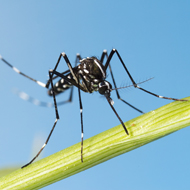
According to the study, the virus is thought to be spread by Haemagogus mosquitoes, but Aedes mosquitoes may also play a part in its transmission.
In January 2015, scientists isolated MAYV in an eight-year-old boy who was displaying signs of fever, abdominal pain and a temperature of over 100ºF.
Given the patient was also infected with DENV-1 - a serotype of Dengue fever, the scientists found it difficult to separate out symptoms that are specific to MAYV infection.
The recent emergence of ZIka and its identification as a major cause of birth defects has brought a great deal of attention to arboviruses.
Scientists say their finding highlights the multiplicity of arbovirus species in Haiti and the evolutionary relatedness among the viruses in Haiti and those circulating in Brazil.
“We do not know if MAYV has epidemic potential; however, in light of recent observations with Chikungunya virus, Dengue fever and Zika virus and the potential for transmission of MAYV by aides and Haemagogus spp. mosquitoes, inclusion of MayV in studies of arbovirus transmission seems to be indicated,” the scientists conclude.


 Defra has published guidance for the vet sector ahead of a proposed UK-EU Sanitary and Phytosanitary agreement.



